





Your bag is open on the floor, the school list is on your phone, and you are wondering whether you need another notebook, a second water bottle or a uniform. That is how back-to-school shopping gets expensive: what you need Monday gets mixed up with what might be useful later. Use this what to bring to school checklist to separate the daily carry from course and optional items. Start with the school or course list, keep what still works, and wait before adding duplicates. The categories follow moments that cause friction: leaving home, starting a lesson, changing for PE, handling a long day and finding a place for music practice. It is a UK starting point, not a universal school-issued list.
Everyday Carry and Organisation
Backpack. Carrying Monday's books, lunch and a coat onto a bus makes a manageable bag matter through a full day. Reuse it if it still fits and carries comfortably.
Pencil case. When a pen vanishes between maths and English, a small case saves the search. Keep the tools you use; an extra organiser adds weight.
Reusable water bottle. Lunch is when you notice there is nothing to refill. Bring one the school permits and check the cupboard; the bottle you own is enough.
Lunchbox. A leaking or awkward box makes the middle of the day harder. Match it to the commute and lunch, and keep last year's if it still closes, cleans and travels well.
Planner or timetable. The useful moment is the night before: check tomorrow's lessons so you do not carry every book, folder and activity item.
Wallet, ID holder or travel card. At the gate, library or station, a missing card turns a morning into a scramble. Carry it when your school or commute requires it, and keep it secure.
Stationery and Learning Tools
Blue or black pens. When the teacher says start, you want a pen that works, not colours you never use. Keep a small set for written work and check the school's preferred ink.
HB pencils. They cover diagrams, drafts and maths work. Keep enough for the case, sharpen them as needed and wait before buying a bulk pack for ordinary classwork.
Rubber. One clean rubber helps when a diagram or calculation needs correcting. Use the one at home if it still works; it does not need to become an art set.
Pencil sharpener. A blunt pencil is a problem during a lesson. Carry a safe, lidded sharpener if appropriate, unless the classroom provides one.
30 cm ruler. A straight line or measurement needs a readable ruler. Keep the straight one for the new term instead of buying a specialist version without a class requirement.
Maths set or approved calculator. Do not discover in the first maths lesson that a tool is required or restricted. Check the teacher's specification, then use an existing set or calculator where possible.
Uniform, PE and Weather Layers
School shirts or polos. Monday-morning stress is often the laundry. Check fit, condition and uniform rules before replacing a top that still gets through the week.
Trousers, skirt or pinafore. You need to sit, walk and move in the approved layer. A fit check is better than assuming a new year means a completely new set.
Jumper or cardigan. Keep the layer for a cold classroom while following uniform guidance. If it still fits and washes well, it has not become unnecessary overnight.
School shoes. Think about the walk, wet pavements and the day's movement, not only how they look. Check fit, soles and condition before replacing them.
PE kit and PE bag. The annoyance is carrying a kit when you do not need it, then forgetting it when you do. Follow the week's PE schedule and use a locker if available.
Waterproof coat or light jacket. A rain shower at the bus stop can change the commute. Bring an outer layer suited to the day and replace the old one only when fit or performance fails.
Personal, Tech and Course Extras
Student ID or access card. Keep the card your school uses for entry, borrowing or attendance with your daily essentials, so it is ready at the gate instead of hiding in a drawer.
Required device. Bring a laptop or tablet only when a class or course needs it. Check whether the school already provides one before carrying or buying another.
Charger. When the battery warning appears mid-afternoon, the existing charger is more useful than a duplicate. Check the connector and do not assume a power bank is allowed.
Headphones or earbuds for approved study. They can help with language work or instrument practice in a shared room, but only when school, course and accommodation rules allow them.
Tissues or hand sanitiser. A small supply can help after a spill or when handwashing is not close by, subject to school guidance. Check your bag before buying another.
Name labels or a permanent marker. A name can help a similar-looking hoodie or folder find its way back. Use what is already at home for items that travel.
Portable Musical Instruments for Home, Travel or Student Rooms
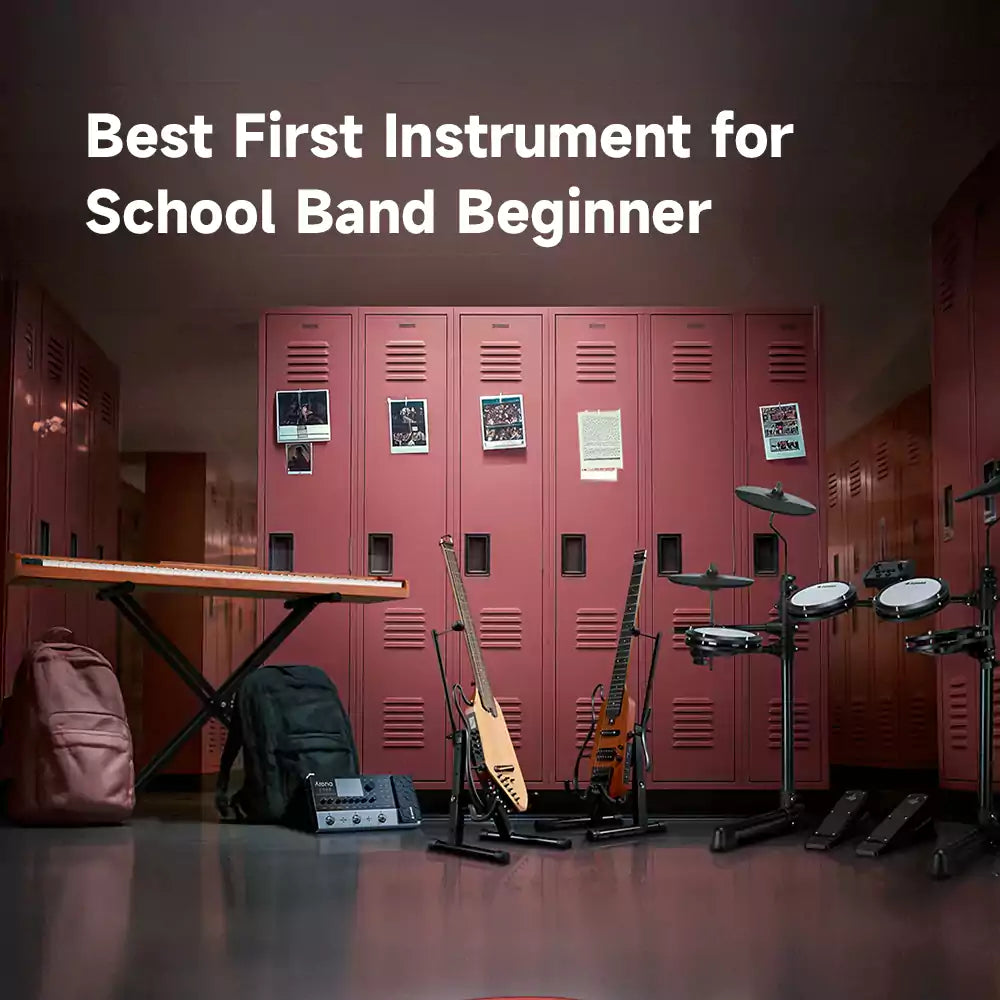
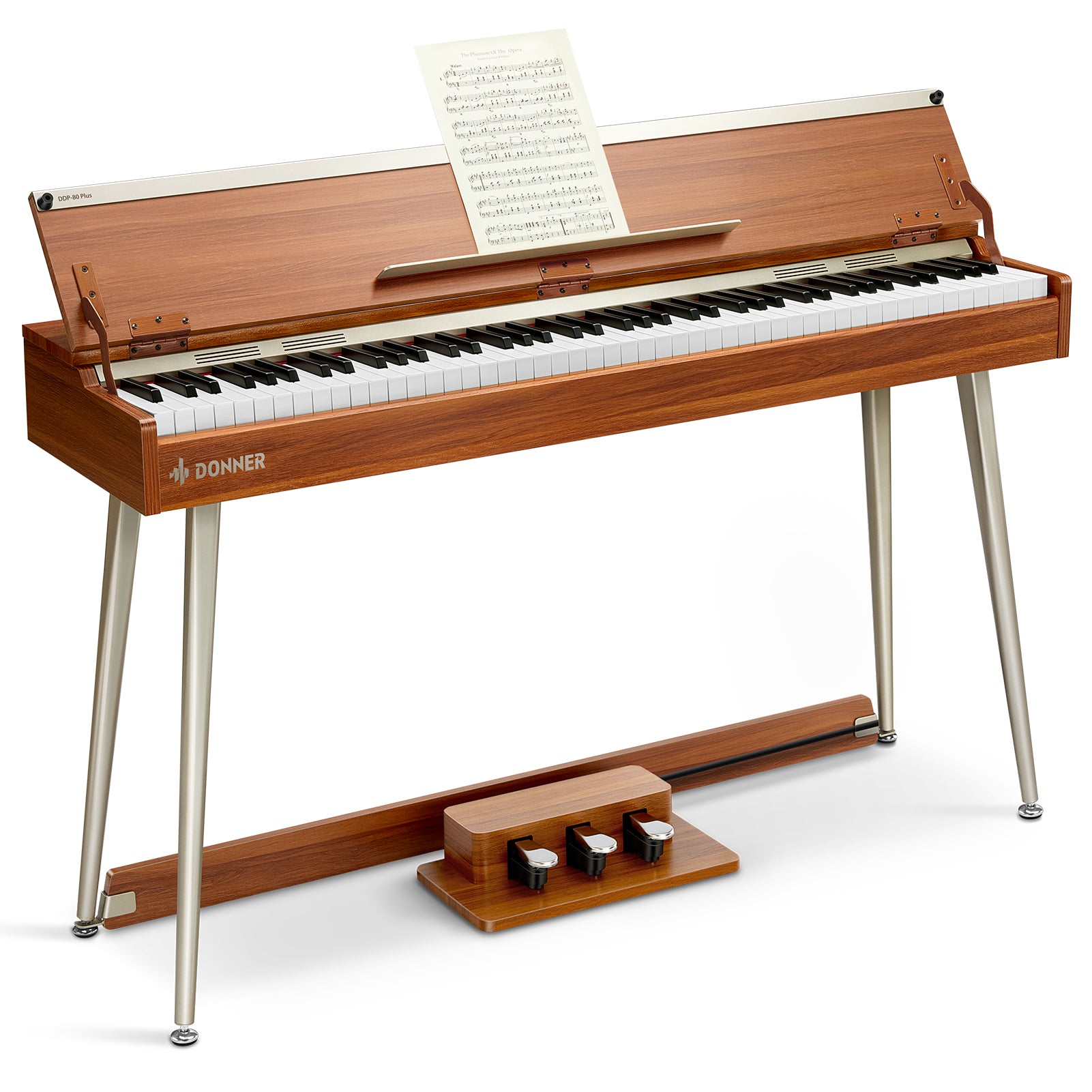
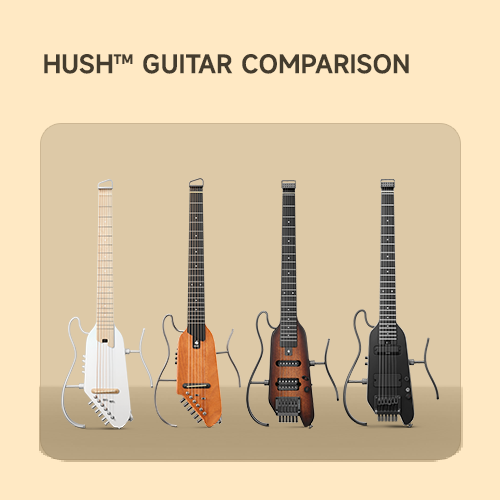
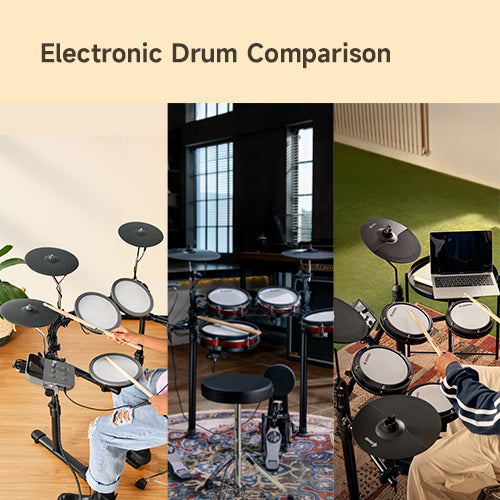
Music is the category to leave until you know the routine. You may picture practising after class, then realise the room has nowhere for a stand, kit or gig bag. Choose one instrument for an existing habit or confirmed course need. Start with DEP-20 and DEP-1S keyboards, then HUSH-I and HLX-500 guitars, followed by DED-80 and DED-70 electronic drums. Storage, roommates, sound rules and housing permission decide whether it belongs. Headphones and mesh pads can reduce audible output, not restrictions.
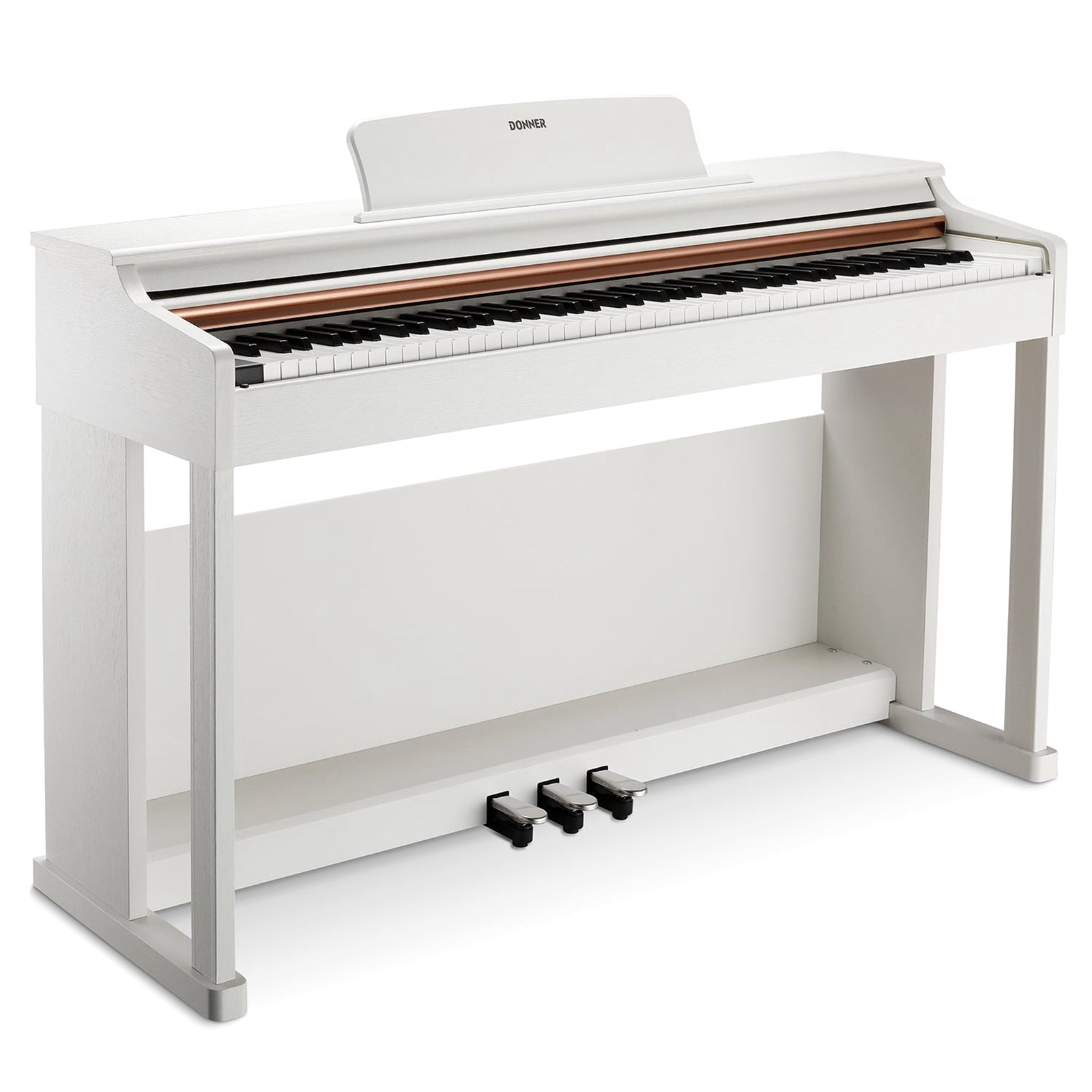
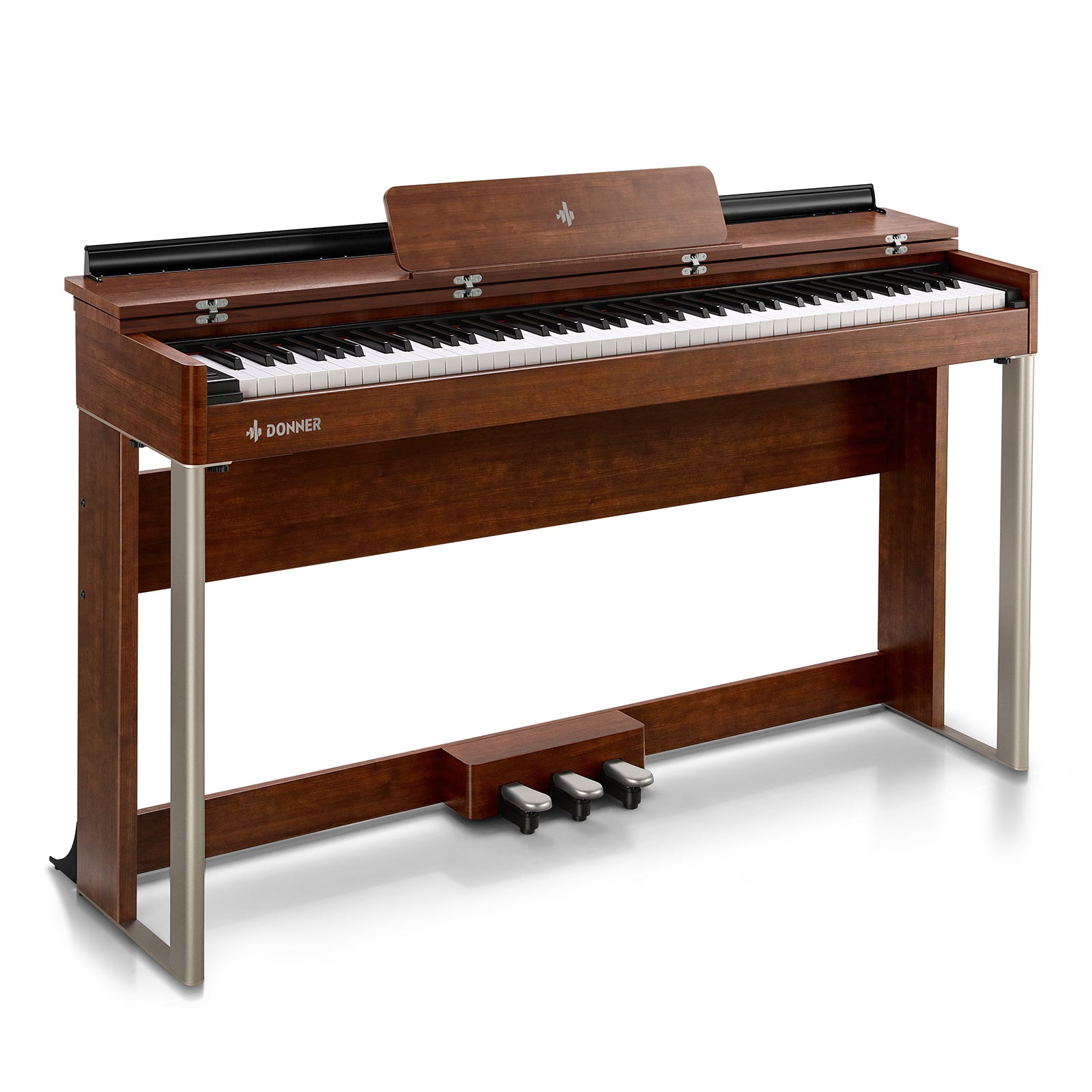
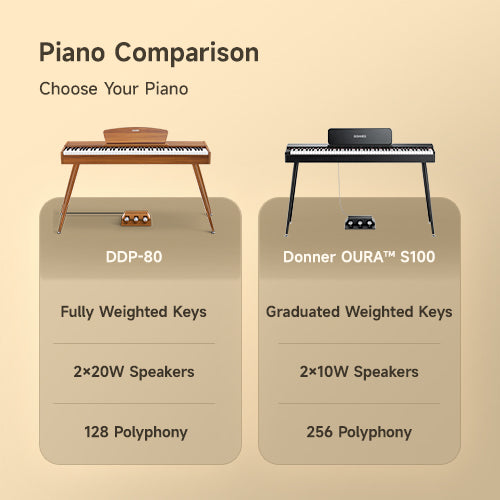
Donner DEP-20 Weighted Digital Piano Best for weighted practice

The Donner DEP-20 Weighted Digital Piano is for the student whose piano practice happens at home or in one settled room. Its 88 full-weighted keys, furniture stand and three-pedal unit support a consistent corner, while the headphone output can help manage amplified sound when rules allow. At 24.75 kg with stand, it is a room move, not a daily school-bag instrument.
Donner DEP-1S Semi-Weighted Keyboard Digital Piano Best for flexible practice

The Donner DEP-1S Semi-Weighted Keyboard Digital Piano fits a beginner who needs one 88-key setup for lessons, home practice and occasional room changes. Its stand-based format gives you more flexibility to place it, while Bluetooth audio/MIDI and USB-MIDI help only if you use them for learning or recording. Keep the stand and cables together when the setup moves.
Donner HUSH-I Acoustic-Electric Travel Guitar Best for headphone guitar

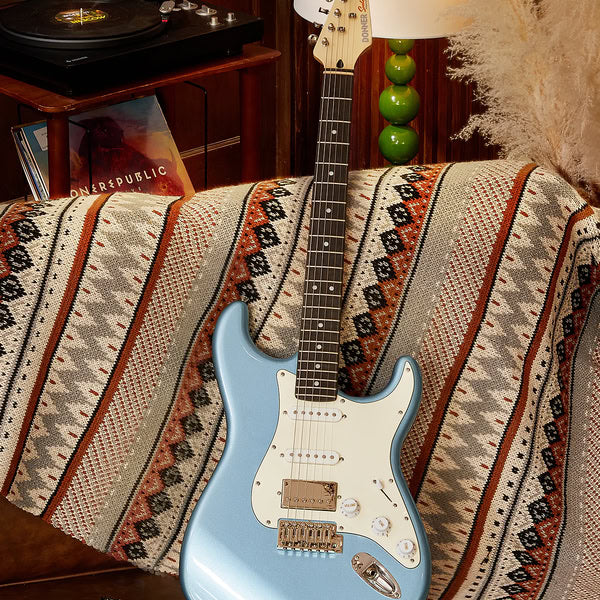
The Donner HUSH-I Acoustic-Electric Travel Guitar suits a guitarist moving between home, lessons and travel. Its headless body, removable frames, 3.5 mm headphone output, piezo pickup, preamp and gig bag support a compact routine. Headphones reduce amplified sound, not string or handling noise; the UK route may surface HUSH I EVO2 or variant content, so check details.
Donner HLX-500 Headless Electric Guitar Best for compact guitar

The Donner HLX-500 Headless Electric Guitar is for the student who already has an approved amp or interface and wants less bulk on a rehearsal commute. Its headless body, 25.5-inch scale, 24 frets, SSH pickup layout and gig bag with backpack or handheld carry modes suit school-year moves. No headphone output is documented, so it is not a silent-practice setup on its own.
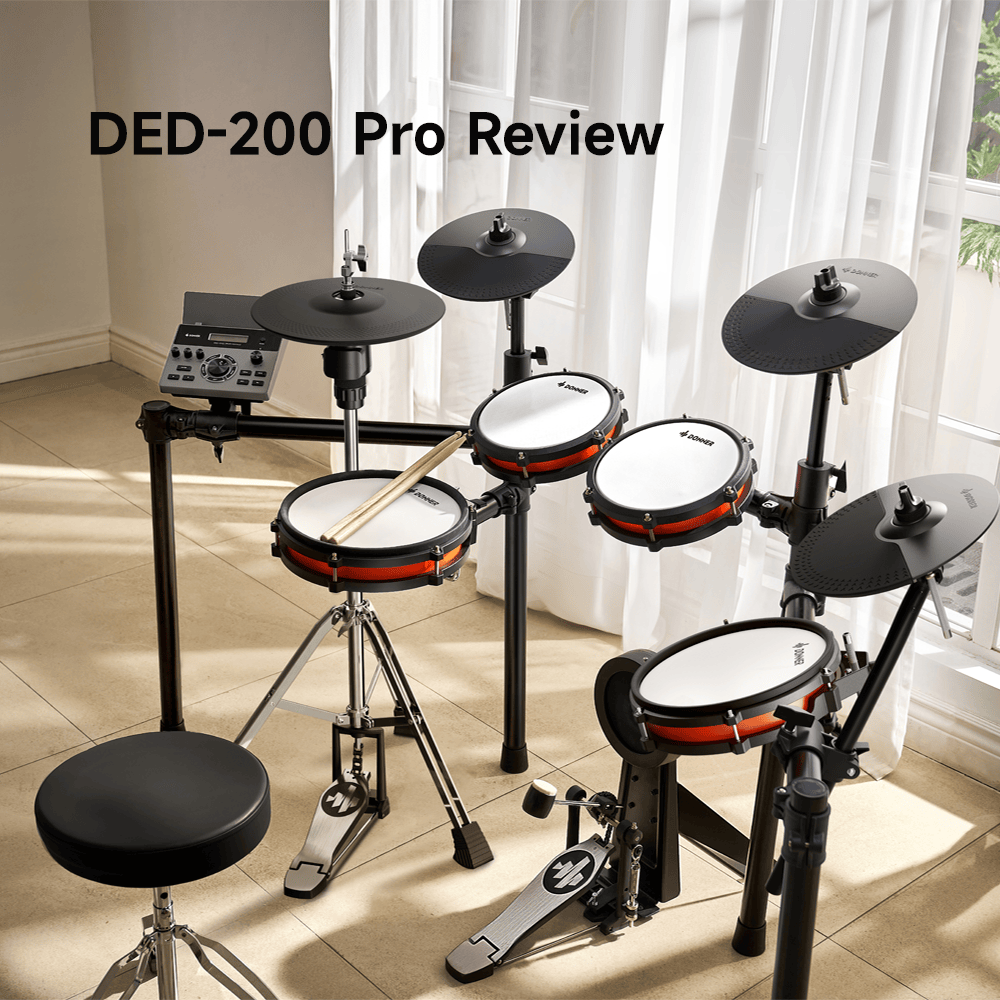
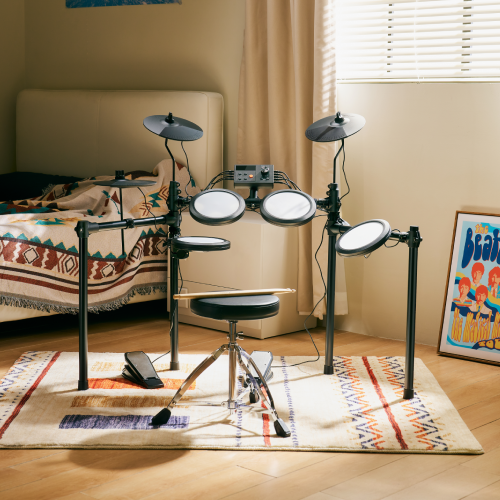
Donner DED-80 Electronic Drum Set Best for foldable drumming

The Donner DED-80 Electronic Drum Set fits a beginner who wants to practise in a permitted room but cannot leave an acoustic kit standing. Its double-layer mesh heads, foldable frame, included headphones, throne and sticks make storage easier, while 180 tones, 15 kits and USB-MIDI give the routine somewhere to grow. Pedals, sticks, floor vibration and housing rules still matter.
Donner DED-70 Electronic Drum Set Best for compact beginners

The Donner DED-70 Electronic Drum Set suits a younger or beginner player whose practice space changes from room to room. Its collapsible rack, four dual-layer mesh heads, headphones and adapter-or-USB-power-bank options keep the setup flexible. Height-adjustable drums and cymbals are listed for ages 6-14; check floor space, pedal noise and accommodation rules before bringing it.
How We Choose What to Bring Without Overbuying
Start with the school's own list. You may be looking at a retailer list late at night, but the teacher's specification is what decides. Keep the item that solves a named requirement; leave generic extras until a real lesson asks for them.
Pack to the timetable. The heaviest bag is usually the one packed for every possible day. Look at tomorrow's lessons and take the books, folders, device, PE gear or practice kit that will actually be used.
Reuse before replacing. Put the existing bag, charger, coat or instrument on the floor and ask whether it still fits, works and meets the current rule. If yes, the new-term feeling is not a reason to replace it.
Test space, sound and transport. Picture the exact room, not an imaginary spare corner. A music setup needs somewhere to live, a way to move and a routine that respects roommates, permitted sound levels and housing rules.
FAQ about What to Bring to School Checklist
Ask what will make tomorrow easier, not what to buy. These answers cover the daily bag, Year 7 and shared-room music.
What should I bring to school every day?
Bring the bag, writing kit, that day's books or folders, water, and lunch or a snack when applicable. Add an ID or access card when required; take a device, charger or activity gear only if the day needs it. Follow the school's list for the final call.
What does a Year 7 need for school?
For a Year 7, start with the school's uniform, a bag, basic stationery, timetable-specific books, water and PE requirements. Add teacher-approved maths or technology equipment only after you know what the school expects. The pupil's timetable, not a generic shopping list, decides the final bag.
How do I avoid buying too many back-to-school supplies?
Put current supplies on the table before buying. Keep the bag, folder, charger, uniform item or instrument that still works; buy the daily core; wait on duplicates until a lesson shows a gap. That turns 'just in case' into a decision before replacing anything else.
Can I bring a digital piano, guitar or electronic drum set to student accommodation?
Sometimes, but the room and housing rules decide. Check storage, sound levels, roommates and routine first. Headphones, mesh pads and compact or foldable designs can help, but do not guarantee silence or approval. These Donner options are optional practice choices, not school instruments by default.
Build a School-Year Setup You Will Actually Use
A new term does not need to begin with a bigger shopping list. Pack the essentials for tomorrow, then leave room for the habits that make the term feel like yours.
Let music help you open the new school term: playing can give a room a familiar rhythm. Make space for music in a way that fits your routine. Donner's mission is to make music more accessible, so your school-year setup can carry what you need, plus something to look forward to.