




The right digital piano depends on what you intend to learn. This buying guide connects lesson requirements with key range, playing response, sound and the equipment that makes a usable practice place.
A first keyboard course and a return to piano study need not lead to the same compromise. The three examples below illustrate choices along the way, rather than a ranked list of winners.
Table of Contents
- Start With the Music You Intend to Learn
- Choose the Range and Action for Your Lessons
- Fit the Support and Pedals to Your Room
- Listen to the Sounds You Will Actually Use
- Match Each Connection to a Task
- Compare the Complete Practice Setup
- Remaining Buying Questions
- Buy for the Way You Will Learn
Start With the Music You Intend to Learn
Write down the music or course, your teacher's expectations and who will use the instrument. Decide whether it will stay assembled and how much room the seat and pedals can occupy.
Separate functions needed for those lessons from features that serve another musical activity. That makes your shortlist easier to explain and easier to test.
Choose the Range and Action for Your Lessons
An 88-key instrument supplies the acoustic piano's full note range, while some starting keyboard work can use fewer keys. Compare the notes in your intended repertoire and the size of the keys before choosing the range.
Velocity sensitivity is the sound's response to playing force; physical weighting is the resistance under your fingers. Try a quiet phrase and repeated notes on the exact model where possible. Record which response suits your lessons rather than assuming every weighted instrument feels the same.
Donner DDP-80 Simple Daily Piano Playing

Pros
- Weighted graded action
- Three-pedal unit
Cons
- Function changes use key combinations
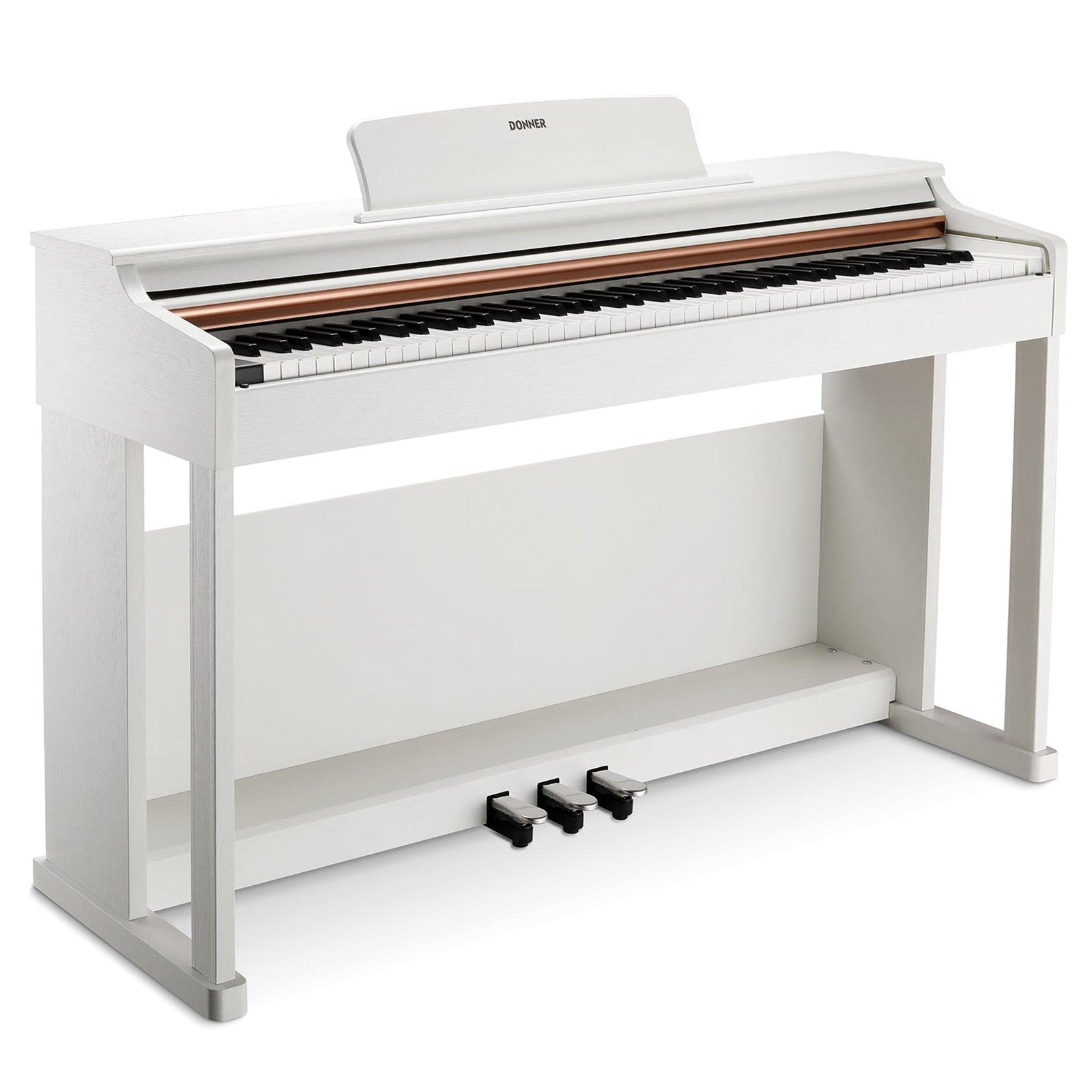
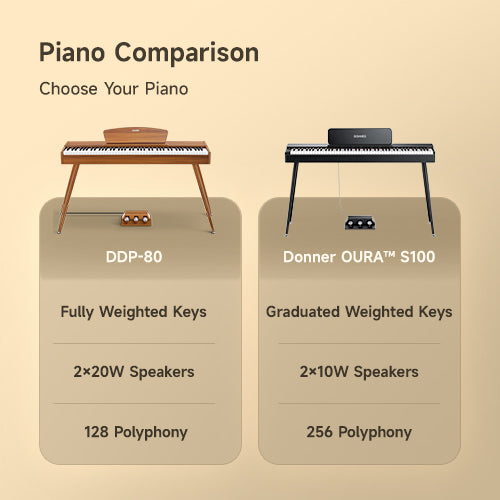
For a learner who wants a focused piano routine, Donner DDP-80 digital piano combines 88 graded hammer-action keys with six sounds. The furniture support and three-pedal unit provide a permanent playing position. Trying its key and pedal shortcuts is part of deciding whether that simple-looking arrangement is convenient for your lessons.
The standard box lists the stand parts and three-pedal unit; the piano-only option excludes a bench. USB-MIDI sends playing information, while AUX output carries the instrument’s sound. Some function changes use pedal-and-key combinations, so the uncluttered controls are worth trying as a routine, not just judging by appearance.
Fit the Support and Pedals to Your Room
A cabinet left ready can make regular practice straightforward. A separate keyboard on a stable stand offers another arrangement when the room must be reset. Allow space for the seat, knees and pedal travel in either case.
Confirm whether the chosen package includes a sustain switch or a three-pedal unit. A photograph may show a possible setup rather than every item in the selected option.
Donner DDP-75 Feature-Rich Home Practice

Pros
- Weighted hammer action
- Accompaniment and recording
Cons
- 31 kg furniture instrument
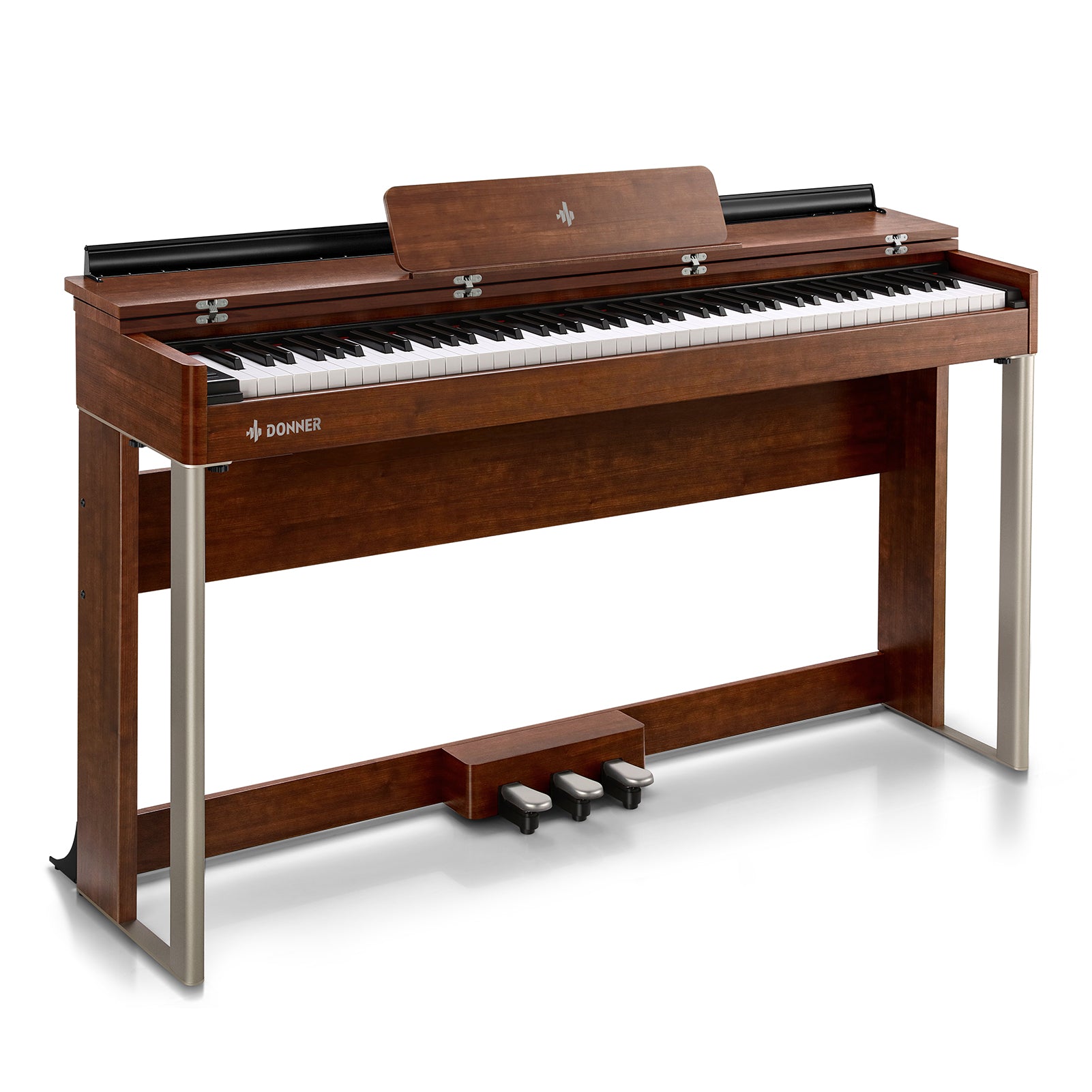
If your practice place can stay assembled, Donner DDP-75 digital piano illustrates the cabinet route with 88 hammer-action keys, a lid and three pedals. The 31 kg furniture format rewards deciding where it belongs before ordering; it is not the same moving task as a separate keyboard.
Its 238 tones, 200 rhythms and recording/playback functions give accompaniment and reviewing a passage a place in the same instrument. The 128-note polyphony describes simultaneous voices, rather than the number of sounds in the menu.
Listen to the Sounds You Will Actually Use
Play the same passage through the speakers and the headphones you intend to use. A piano-only learner may care most about the main voice, while someone playing along to songs may need convenient access to other sounds.
Extra voices describe variety, not a better piano tone. Choose the listening experience and controls that support the music you will actually practise.
Donner DEP-20 Weighted Keys With Variety

Pros
- Weighted hammer action
- 238 instrument tones
Cons
- Furniture assembly required
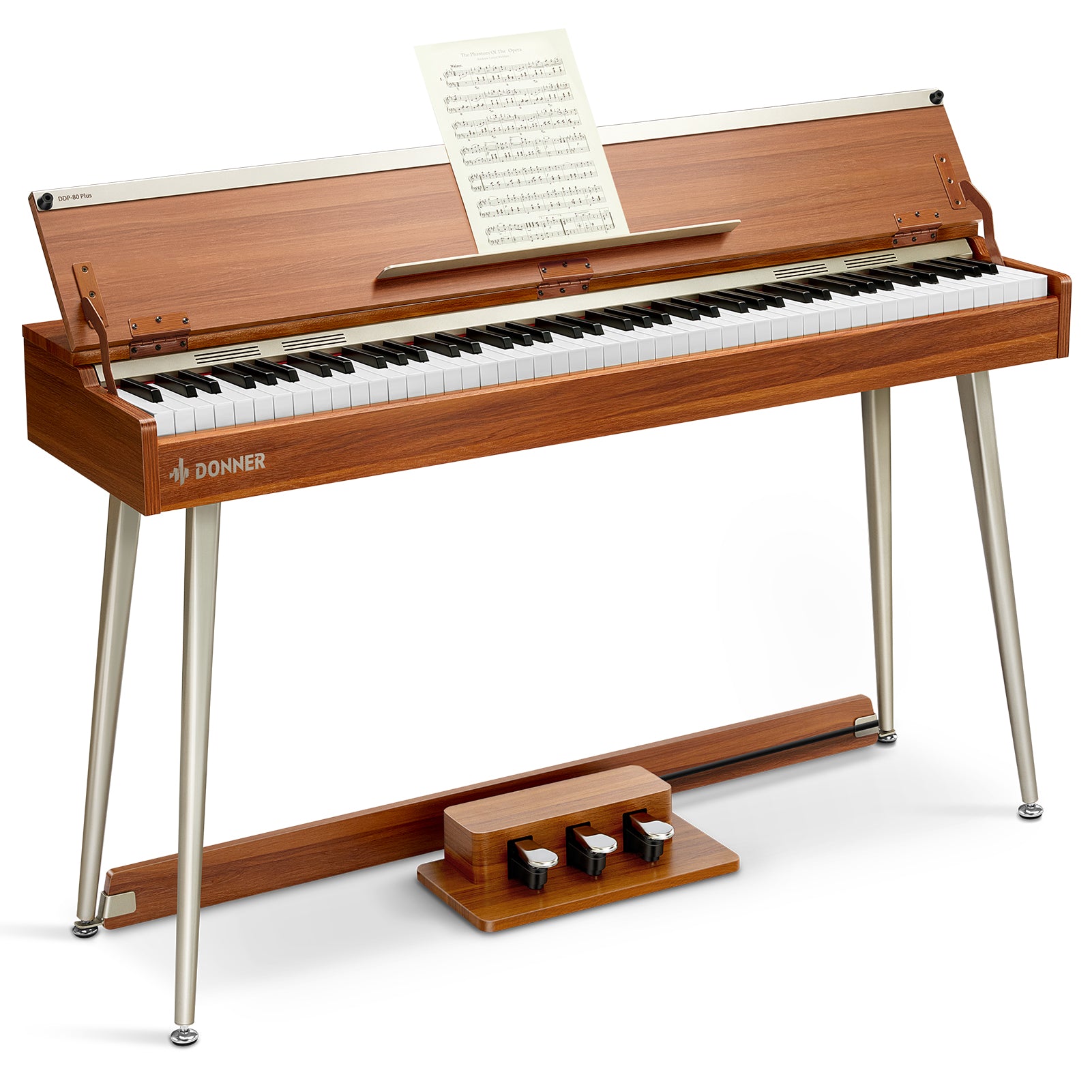
For lessons where the full range and physical key resistance are priorities, Donner DEP-20 digital piano provides 88 hammer-action keys. Its 238 tones keep other musical activities available, but it is the required response—not that sound count—that makes it relevant to this stage of the choice.
Adjustable touch response changes the sound's reaction to your playing, and dual-tone layering combines two voices for an arrangement. A backlit LCD helps with selecting tones and functions. The selected configuration adds furniture support and three pedals. It provides a fixed playing position but requires assembling and placing the furniture.
Match Each Connection to a Task
Describe the connected task in ordinary terms: private listening, hearing accompaniment, sending notes to software or recording the piano's sound. Each requires the appropriate function on the exact instrument.
MIDI carries performance information rather than an audio waveform. USB and Bluetooth can support different tasks on different models, so match the documented route to your intended device instead of choosing by a socket or badge alone.
Compare the Complete Practice Setup
For each exact option, list the stand or cabinet, seat, pedals, correct adaptor and listening equipment required. Mark what is included and what you already own, then add only the missing items.
Compare those complete practice setups and try the usual controls and pedal reach. Your own requirements are a more useful spending rule than an old published price tier.
Remaining Buying Questions
Do Three Pedals Guarantee Half-Pedalling?
No. Pedal count and progressive sustain sensing are separate features. Half-pedalling requires support from both the piano and compatible pedal hardware; a basic on/off footswitch does not provide the same control.
Will a Digital Piano Need Regular Tuning?
It does not need the regular string tuning of an acoustic piano. Electronic pitch adjustment, where provided, is a setting rather than a tuning service. Faulty keys, pedals or power connections still need their own diagnosis.
Buy for the Way You Will Learn
Return to the lesson requirement and the key response you have tried. If the instrument, support and pedals together serve that task, you have a meaningful basis for choosing. Confirm the exact package against your complete list before buying.