




The best budget digital pianos are not all aimed at the same kind of learning. A first keyboard course, piano lessons and returning to familiar pieces can place different demands on the keys, pedals and sounds.
These six instruments all offer the full 88-key piano range. Their action, controls and selected support differ, however, so the useful comparison is what your next stage of playing needs—not how many extras come with the lowest price.
Six Affordable Pianos to Consider
- Donner DDP-75 for Piano Practice and Accompaniment
- Yamaha P-145BT for a Compact Weighted Setup
- Donner DDP-80 for Focused Piano Study
- Roland FP-10 for Keyboard Feel and Shared Lessons
- Donner DEP-20 for Hammer Action With Sound Variety
- Casio CDP-S110 for Practice Away From a Power Socket
Compare the Practice Essentials
| Model | Action | Selected Setup | Sound Range | Price |
|---|---|---|---|---|
| Donner DDP-75 digital piano | 88 hammer-action keys | Furniture stand; three pedals | 238 voices | GBP 389.99 |
| Yamaha P-145BT | 88 graded hammer-action keys | Portable body; support separate; pedal switch | 10 voices | — |
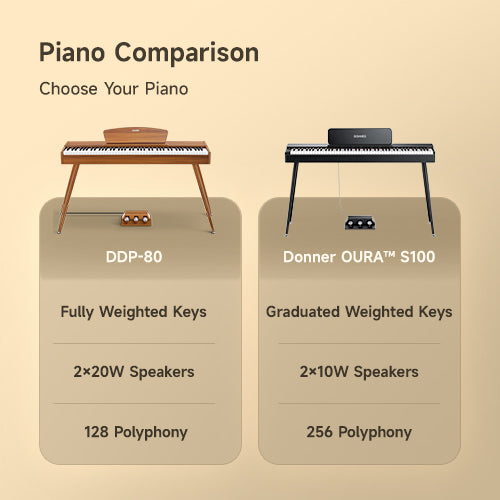
| Donner DDP-80 digital piano | 88 graded hammer-action keys | Furniture stand; three pedals | 6 voices | GBP 435.99 |
| Roland FP-10 | 88 graded hammer-action keys | Portable body; support separate; pedal switch | 15 voices | — |
| Donner DEP-20 digital piano | 88 hammer-action keys | Furniture stand; three pedals | 238 voices | GBP 289.99 |
| Casio CDP-S110 | 88 graded hammer-action keys | Portable body; support separate | 10 voices | — |
Prices refer to the selected configurations. A dash indicates that no price is stated in this comparison.
Donner DDP-75 Feature-Rich Home Practice

Pros
- Weighted hammer action
- Accompaniment and recording
Cons
- 31 kg furniture instrument
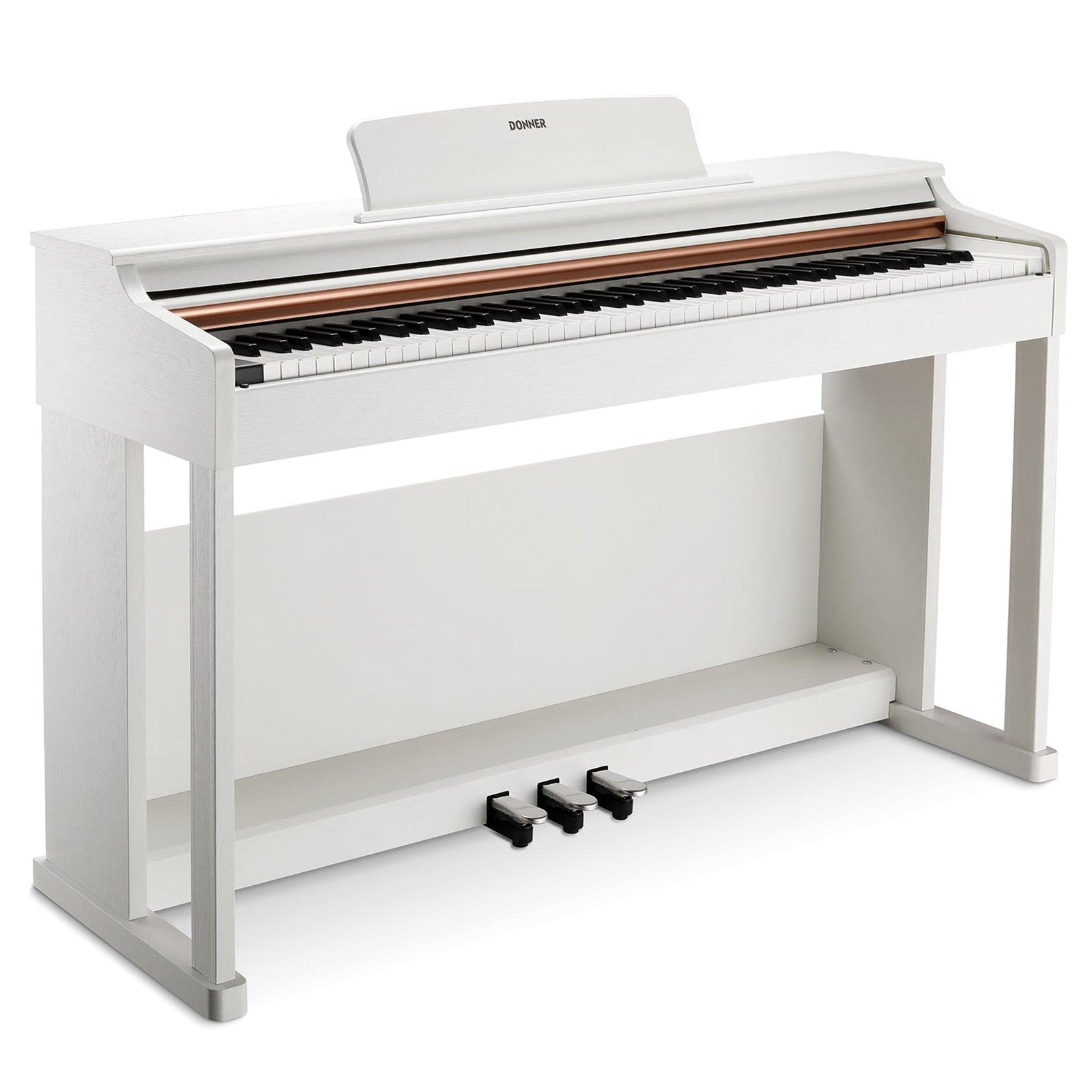
Donner DDP-75 digital piano brings an 88-key hammer-action keyboard into a cabinet with a lid and three pedals. The mechanism gives the keys physical resistance for a weighted playing preference, while selectable touch response adjusts how the sound reacts to your playing.
Its 238 tones, 200 rhythms and recording/playback functions give accompaniment and reviewing a passage a place in the same instrument. The 128-note polyphony describes simultaneous voices, rather than the number of sounds in the menu. This is a fixed-station choice: moving a 31 kg furniture instrument is a different task from lifting a separate keyboard.
Its accompaniment features are useful for songs, while your lesson requirements should decide how much weight to give the mechanism and pedal setup.
Yamaha P-145BT Compact Connected Practice
Pros
- GHC hammer action
- USB audio and MIDI
Cons
- Furniture stand sold separately
Yamaha P-145BT digital piano suits a player who wants graded hammer action in a separate body. Its 88-key GHC mechanism uses graded weighting, with resistance varying across the keyboard, and the 11.1 kg body lets you plan the instrument and support as separate parts of the room arrangement.
The CFIIIS piano voice sits within a selection of 10 sounds. USB audio and MIDI support different computer tasks, while Bluetooth audio input is for receiving sound, not proof of wireless headphone output. Count a stand and any compatible three-pedal upgrade separately; the supplied footswitch is a different pedal arrangement.
Donner DDP-80 Simple Daily Piano Playing

Pros
- Weighted graded action
- Three-pedal unit
Cons
- Function changes use key combinations
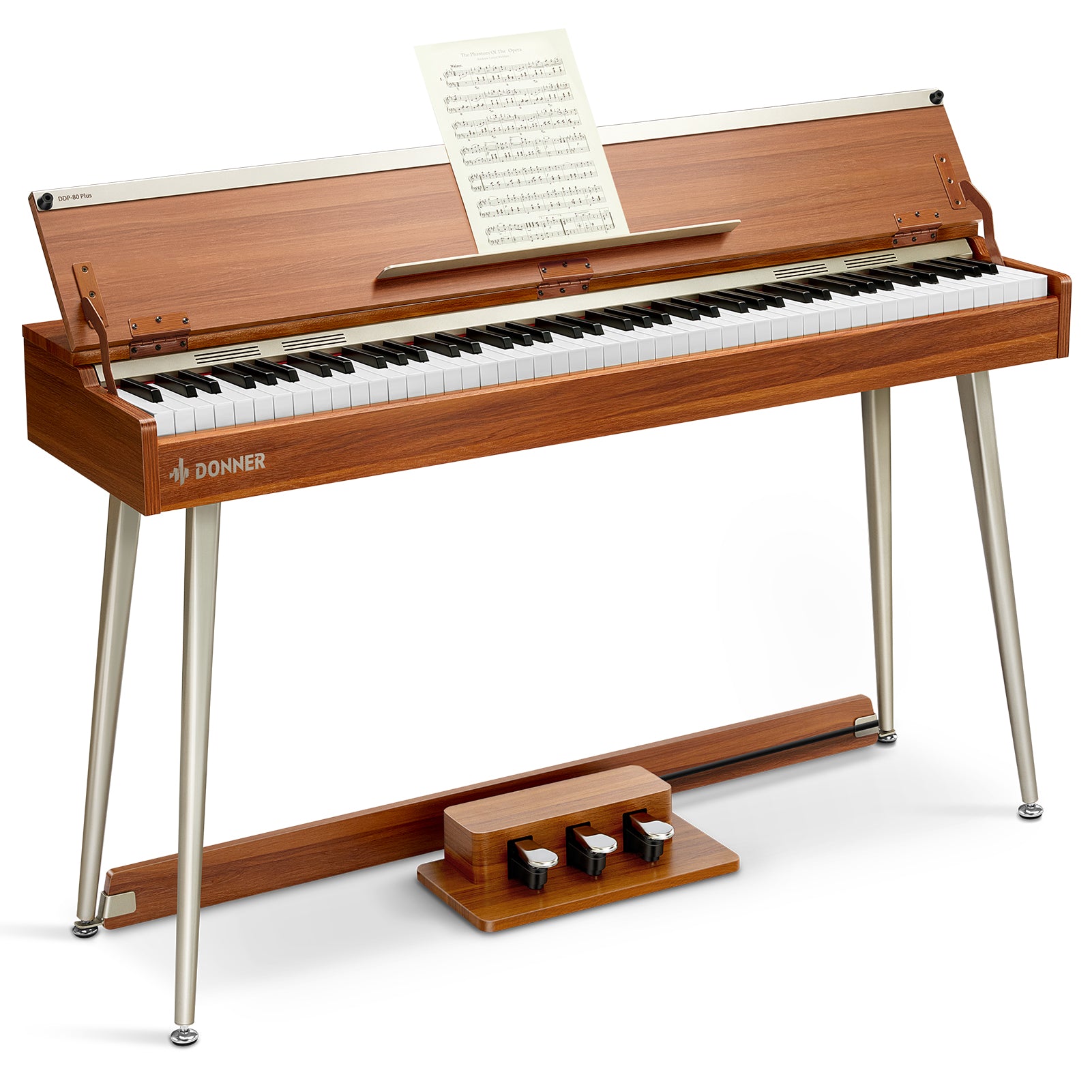
Donner DDP-80 digital piano is a permanent piano setup for a player who values a focused selection over a workstation-style panel. Its 88 graded hammer-action keys provide physical weighting, and six tones leave room for some variety without an extensive sound menu.
The standard box lists the stand parts and three-pedal unit; the piano-only option excludes a bench. USB-MIDI sends playing information, while AUX output carries the instrument’s sound. Some function changes use pedal-and-key combinations, so the uncluttered controls are worth trying as a routine, not just judging by appearance.
A returning learner may prefer this focused selection, provided the shortcut-based routine is comfortable during practice.
Roland FP-10 Piano Touch in Less Space
Pros
- PHA-4 Standard action
- Twin Piano practice mode
Cons
- Furniture stand sold separately
Roland FP-10 digital piano puts the emphasis on the keyboard mechanism rather than an included cabinet. The 88-key PHA-4 Standard action combines graded weighting with escapement, a simulated point of resistance in the key movement. Twin Piano provides a same-register layout for shared practice.
The 12.3 kg body and supplied pedal switch still need suitable support. A stand and the compatible DP-10 half-pedal accessory are separate choices. USB-MIDI sends performance information; Bluetooth MIDI availability depends on the market version. The panel provides 15 tones, with additional sounds accessed through a compatible app.
Donner DEP-20 Weighted Keys With Variety

Pros
- Weighted hammer action
- 238 instrument tones
Cons
- Furniture assembly required
Donner DEP-20 digital piano pairs 88 full-size hammer-action keys with 238 instrument tones. That combination is useful if you want physical key resistance for piano practice and the option of exploring other sounds, rather than choosing between those activities.
Adjustable touch response changes the sound's reaction to your playing, and dual-tone layering combines two voices for an arrangement. A backlit LCD helps with selecting tones and functions. The selected configuration adds furniture support and three pedals. It provides a fixed playing position but requires assembling and placing the furniture.
For study, judge the required response first and treat the other voices as optional musical variety.
Casio CDP-S110 Portable Battery-Powered Practice
Pros
- Hammer-action keyboard
- Six-AA battery operation
Cons
- Furniture stand sold separately
Casio CDP-S110 digital piano is a practical alternative when the playing location changes. Its 88-key Scaled Hammer Action Keyboard II retains a hammer-action mechanism in a body 232 mm deep and weighing 10.5 kg without batteries.
The specified adapter or six AA alkaline batteries provide separate power options. Ten tones keep the selection relatively focused; USB-MIDI carries performance data, and the combined headphones/output socket provides an audio route. A furniture stand is separate, so battery operation solves the power question rather than the whole support and seating arrangement.
Spend on What Your Playing Requires
A practical budget starts with the music you intend to study. It becomes easier to leave out unnecessary extras once you know which response and equipment your practice calls for.
Start With the Music and Lessons
A beginner keyboard student using rhythms and songs may value accompaniment controls. A returning piano learner working on a written piece may put more weight on the key response and pedals. Neither situation makes one specification compulsory for every beginner.
Agree the relevant range, action and pedal needs with your teacher where lessons are involved. Then compare instruments against those requirements rather than treating an 88-key label as the whole answer.
Decide What Simplicity Removes
A small sound selection can leave fewer choices between you and a piano piece. Yet a clean-looking panel may use key or pedal combinations to change settings. Simplicity in appearance is not always the same as direct access.
Try selecting the main sound, setting the volume and reaching a practice function you will use. The more useful design is the one that supports your routine without interrupting it.
Choose Support and Pedals Together
Compare a portable instrument on stable support with the selected furniture package, including the seat and the space your feet need. A keyboard-only price leaves more of that arrangement to you.
Identify the supplied pedal as well. An on/off sustain switch and a compatible half-pedal system offer different control; three pedals alone do not prove half-pedal support. Add the equipment your study actually requires to each complete setup.
Questions About Buying on a Budget
Can I Use Any Sustain Pedal?
No. The connector, pedal wiring and functions must suit the exact piano. A plug that fits does not establish half-pedal support. Use the manufacturer’s compatible pedal information, especially when replacing a basic switch with a continuous pedal.
Can a Digital Piano Cover All My Lesson Needs?
It may cover your home practice needs, but the required action, range and pedal functions depend on the music and teaching programme. Agree those requirements with the teacher before buying; do not treat a low price or an 88-key label as proof of suitability for every course.
Does an Affordable Digital Piano Need Regular Tuning?
No regular acoustic string tuning is required. Digital pitch adjustment, where provided, is a setting rather than a tuning service. Keys, speakers, connections and power supplies can still need attention if a fault develops.
Buy for Your Next Stage of Playing
Buy for the music and lessons ahead of you. Choose a response you can work with, support that fits the room and the pedal functions your practice needs. Once those are covered, additional sounds are a choice rather than a reason to stretch the budget.